industrialsite selection
Industrial site selection: a 14-point checklist for corporate operations leaders
May 12, 2026
industrialbuild-to-suitcase study
April 15, 2026 · Max Benedict · 8 min read

Max Benedict
Director of Development at Third Coast Development. Leads industrial build-to-suit and capital structuring.
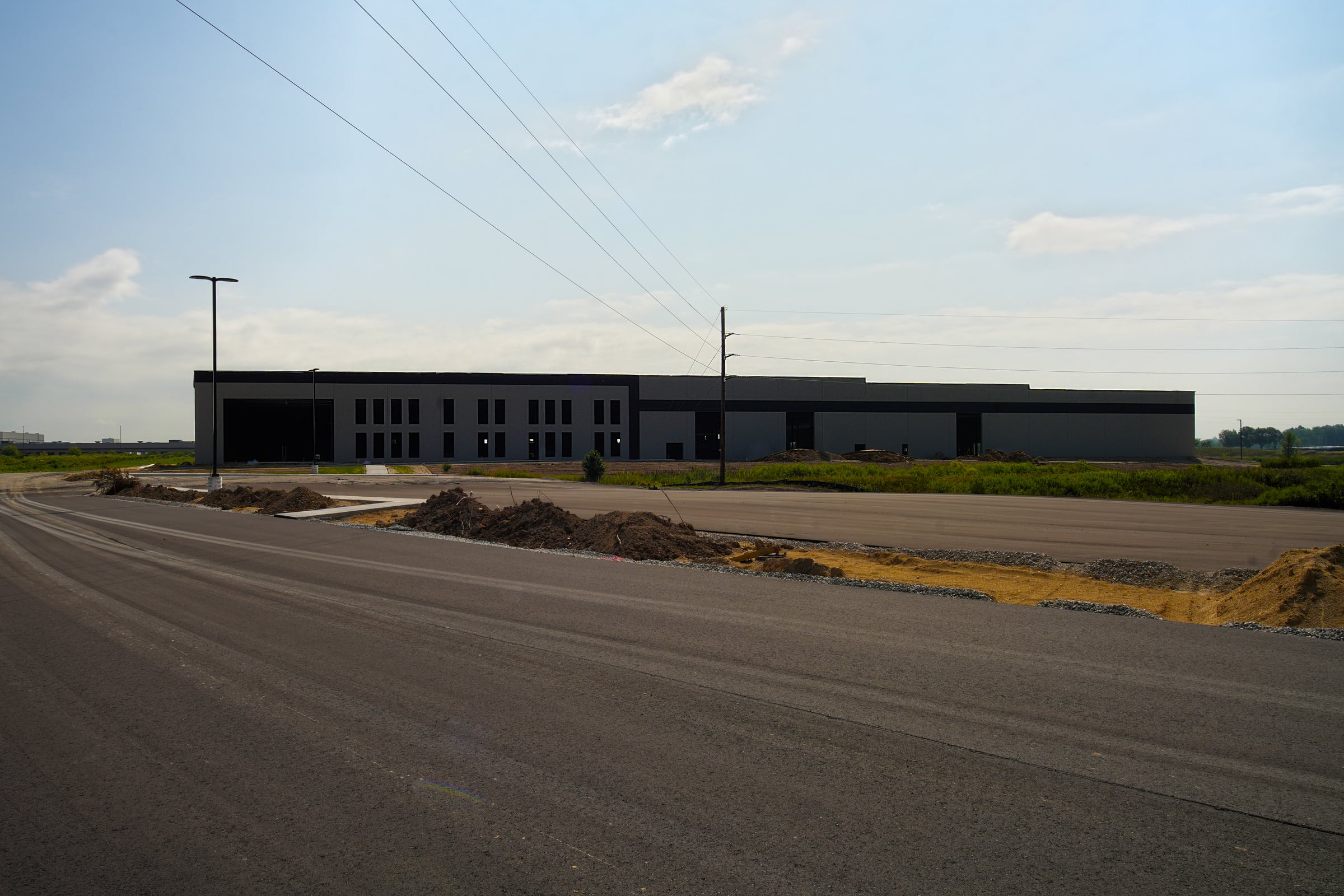
People ask us what a project like this looks like from the inside. The honest answer is that 4175 60th Street SE, a 600,000-square-foot industrial building in Kentwood fully leased to Proper Beverage Co. and Trane, was the product of about three years of work that started before there was a building, before there were tenants, before there was even a deal. What follows is the version we wish we had access to when we were starting out: the actual sequence, the actual decisions, and the parts that don’t fit neatly into a marketing case study.
The industrial site inventory in West Michigan is tight, and it has been tight for a long time. Most of the obvious large-format parcels along the 28th Street and Patterson corridors have either been built out or are spoken for. When we started looking for a site capable of supporting a 500,000-plus square foot footprint with truck circulation, trailer storage, and rail-adjacent options, the universe of viable parcels in our target submarkets was small enough to fit on one page.
60th Street and East Paris Avenue SE is one of the corridors where you can still find scale. The parcel sits inside Kentwood, with access to M-6 and the broader West Michigan distribution network, and it had the depth and frontage we needed for a single-story tilt-up building of this size. Just as important, the surrounding land use is predominantly industrial, which meant the building would land in context rather than fighting its neighbors.
Due diligence on a parcel this large is unglamorous and consequential. Geotech borings to confirm load-bearing capacity for a building with this much slab. Environmental Phase I and Phase II work, because almost no large industrial parcel in this region is paperwork-clean. Wetland delineation. Utility capacity confirmation, especially on the electrical service side. Modern industrial users have power requirements that would have been considered absurd a decade ago. None of this is optional, and skipping any of it is how a project goes from “great deal” to “embarrassing mistake” inside of eighteen months.
Kentwood is a generally pro-development municipality, but “pro-development” is not “rubber stamp.” Site plan review, traffic impact study, stormwater management, building permits: each of those is its own conversation, and the conversations happen in series, not in parallel.
The way you move fast here is by being early and being honest. We started talking to city staff before we had a tenant signed, with an explicit acknowledgment that this was a speculative concept that needed their input to become real. That posture, showing up to learn rather than to demand, is what lets you compress a typical 6-to-9 month entitlement timeline when the rest of the deal requires it. The flip side: a tenant timeline that’s tighter than what the entitlement process can actually deliver becomes a problem you can’t engineer around. Set expectations early.
A $70M-class industrial project doesn’t get built on a single source of capital. The stack on a deal like this typically blends developer equity, construction debt from a regional lender, permanent debt or sale-leaseback proceeds at stabilization, and, where the project qualifies, a layered package of economic development incentives.
For industrial projects in Michigan, the most common tools are the Industrial Facilities Tax (IFT) exemption under Public Act 198, which can substantially reduce the personal property and real property tax burden on new industrial construction; Brownfield Tax Increment Financing where there’s environmental work to be done; and MEDC performance grants tied to capital investment and job creation. We don’t claim any specific incentive without verifying it for the specific project, and we won’t here either. Incentives are deal-specific and politically variable. What we will say is that the difference between a project that pencils and one that doesn’t, on this scale, is often the incentive stack. Treat it as core to the financial engineering, not as a bonus.
The other underappreciated part of the capital story is timing. Industrial construction lenders are conservative right now, and they want to see signed leases before they fund. That means your job as the developer is to keep the design and the lease conversations in sync, so that when you go to close construction debt, the package is complete.
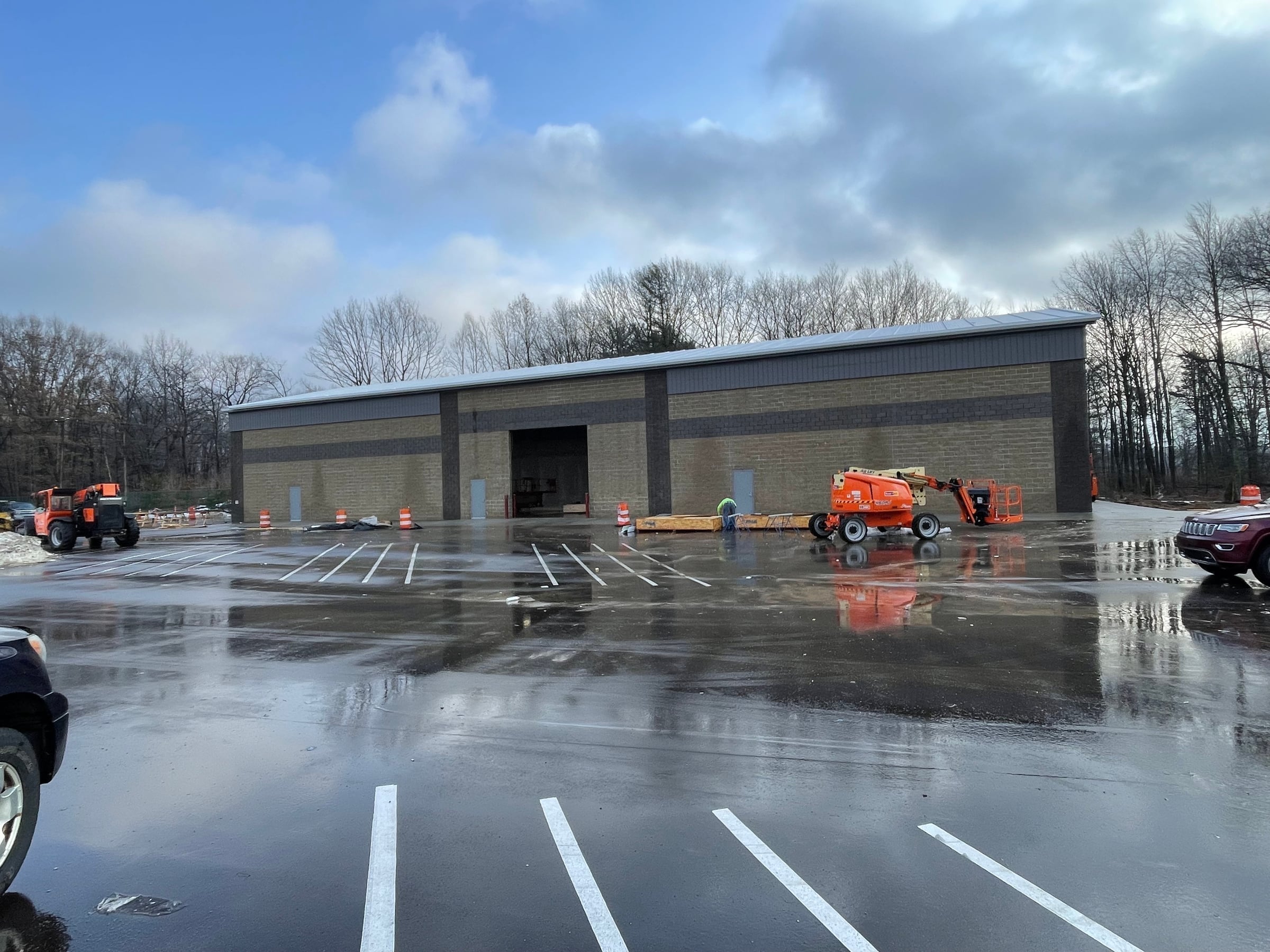
We’ve worked with Pioneer Construction on the GC side for a long time, and the value of that relationship on a project of this size is hard to overstate. Modern bulk-industrial buildings of this profile are almost always tilt-up concrete construction. The panels are cast on-site, lifted into place, and tied to a structural steel roof system. It’s the right answer for speed, cost, and durability at this scale. Structural steel framing throughout would be slower and more expensive without giving you a meaningfully better building.
What you actually get out of a long-running GC relationship is the early-and-honest conversation about cost. The pricing exercise on a building like this is not a one-shot bid; it’s an iterative process where the design team and the GC are talking weekly about what’s driving cost, what could come out, and what tenant requirements push the budget in a direction that needs to be re-priced into the lease. Owners who skip that integration end up either over-budget at delivery or under-built relative to what the tenant actually needs. Neither is acceptable.
Coordinating the design team, the GC, the civil engineer, and the tenant fit-out plans is the development manager’s job, and it’s the part of the work that doesn’t photograph well. It is, however, the part that determines whether the project gets delivered on time.
Two anchor tenants ended up sharing the building: Proper Beverage Co. taking approximately 300,000 square feet, and Trane taking approximately 300,000 square feet. A two-tenant industrial BTS at this scale is unusual but not exotic, and the structuring decisions that make it work are worth describing.
The simple version: the building was designed as a demising-flexible shell. The roof, walls, dock layout, drive aisles, and utility infrastructure were specified to support a future demise without surgical intervention. We didn’t know going in that we’d end up with two tenants of this size; we knew we needed to leave that option open, because finding a single 600,000-square-foot user is harder than finding two 300,000-square-foot users, and the deal economics don’t penalize you much for the optionality.
Lease structures on multi-tenant industrial of this size tend to be triple-net with carefully negotiated CAM allocations. The trailer yard, the truck court, the shared utilities, the perimeter and parking lot maintenance. Each of those items needs a clean allocation methodology that scales as the tenants’ usage scales. The lease that gets you to signing without addressing those questions is the lease that creates friction every quarter for the next ten years. Spend the time.
From a tenant’s perspective, the building delivers when they can move equipment in. From a developer’s perspective, certificate of occupancy is the milestone, and there’s a window between substantial completion and CO where the tenant fit-out work is happening in parallel with the punch list on the shell. Coordinating those two workstreams, and keeping the tenant’s contractors out of the GC’s way without slowing either down, is the last 5% of project delivery that determines whether the tenant’s opinion of you on day one is “professionals” or “still figuring it out.”
We delivered the shell. The tenants did their fit-outs. Both are operating. That’s the goal.
Three things, in order of importance. First: the relationships you have before the project starts determine almost everything about how the project goes. Pioneer on the GC side, our design team, the city staff in Kentwood, our lenders, the tenant brokers; each of those relationships compounded into a faster, smoother, better-built project than would have been possible cold.
Second: large industrial is a discipline of scale, not just of size. The same instincts that make a 60,000-square-foot project go well will not, on their own, deliver a 600,000-square-foot project. The pricing exercises are different. The financing is different. The tenant conversations are different. The risk profile is different. Anyone who tells you otherwise hasn’t done one yet.
Third: the West Michigan industrial market is mature enough to support deals of this size, and it’s not going to be unusual for the next decade. If you’re a corporate user with a serious distribution or manufacturing requirement and you want to talk about whether the region, and a developer who’s actually built this kind of project, is the right answer, we’d like to be in that conversation early.
See our industrial build-to-suit capability page for the full overview of how we approach projects of this scale, from 50,000 to 600,000+ square feet. Get in touch if you’re scoping a site selection or build-to-suit RFP. We’d rather have the conversation before the spec is finalized than after.
Written by
Max Benedict
Director of Development at Third Coast Development. Leads industrial build-to-suit and capital structuring.
industrialsite selection
May 12, 2026
industrialwest michigan
May 10, 2026
incentivesMEDC
May 8, 2026